
Let’s be honest. Your paper resume sits in a drawer, as exciting as yesterday’s bread. In the age of Instagram feasts and chef celebrity, your real calling card is your chef bio.
Think of it as your signature dish, served in paragraph form. This isn’t an “About Me” page. It’s your culinary manifesto. The foundation stone of your personal brand.
Why does this narrative matter more than a list of accolades? Because people hire stories, not just skills. A powerful chef bio transforms you from a qualified candidate into a memorable artist. It’s the secret sauce for getting booked, followed, and remembered.
We’re moving beyond the corporate headshot. We’re building a narrative that captures your essence. This introduction is the first step in building your chef portfolio, the visual and narrative résumé for today’s culinary pros.
Ready to turn your story into your strongest asset? Let’s begin.
Elements of a Memorable Bio
A standout chef bio is more than just a resume. It’s a mix of your professional essence, with each part adding flavor. Forget the usual CV template. We’re crafting a story worthy of a Michelin star.
Let’s explore the essential mirepoix of a memorable chef introduction.
The Hook: Your Amuse-Bouche Intro
Your opening lines are like an amuse-bouche. They should be surprising and set the tone. It’s not just “Hello, I’m Chef John.” It’s a statement that grabs attention.
Are you a classically trained chef who loves food trucks? Or a forager who sees the forest as a pantry? Your chef introduction should be as exciting as the first bite of a crème brûlée.
The Narrative Arc: From Peat Moss to Pass
Your career story is the main dish. Tell it as a story, not a list. Think of Chef Heatley’s journey from peat moss to Hell’s Kitchen. That’s a story of growth.
Include your stations, mentors, and failures. A list of restaurants is boring. But a story of rising from dish pit to sous chef is compelling.
Your resume is the ingredient list. Your bio is the recipe for your career.
This is your dish’s raison d’être. Are you a “farm-to-table” advocate or a hot sauce master? Your philosophy is the reason behind your work. It’s the backbone of your story.
This is where you share menus and recipes. They’re not just documents but proof of your beliefs.
The Visual Feast: Plating is Everything
High-quality photos are essential. They’re like the plating of your dish. A text-heavy bio is dull. But a stunning photo invites the reader in.
Photos show your technique and style. They make your philosophy real.
The Social Proof: The Chef’s Kiss
Testimonials and references are the garnish. They add credibility. A quote from a respected critic or mentor is invaluable. It proves your greatness.
The Secret Ingredient: A Pinch of Personality
Lastly, add a personal touch. What do you love outside of cooking? Are you a vintage cast-iron collector or a chili-eating champion? This makes you relatable and memorable.
Master these elements, and your chef bio becomes more than an introduction. It becomes an invitation to your table.
Telling Your Culinary Story
Your culinary story is more than a resume. It’s what makes people remember you. A list of restaurants and awards is just data. Your story is the emotional algorithm that shows who you are and why you matter.
Think of the chef who started his journey at thirteen. He doesn’t just say “experienced.” He tells a story of a father’s ultimatum, a 1976 Brown Chevy Malibu, and Ozzy Osbourne’s music. This isn’t just information; it’s a montage that creates a world.
Another chef connects her story to her senses. Born in Buenos Aires, she remembers the smells from her mother’s kitchen and her grandmother’s farm. For her, “farm to table” is a childhood smell. This goes straight to the gut.
These details add depth and clarity to your story. They are the soul of your ‘chef about me’ section. Without them, you’re just another name on a menu.
So, what are your touchstones? What was your first spectacular kitchen disaster? (Apple cinnamon beurre blanc, anyone?). Who was the mentor who showed you the difference between cooking and craft? The moment you knew this chaotic, beautiful life was for you?
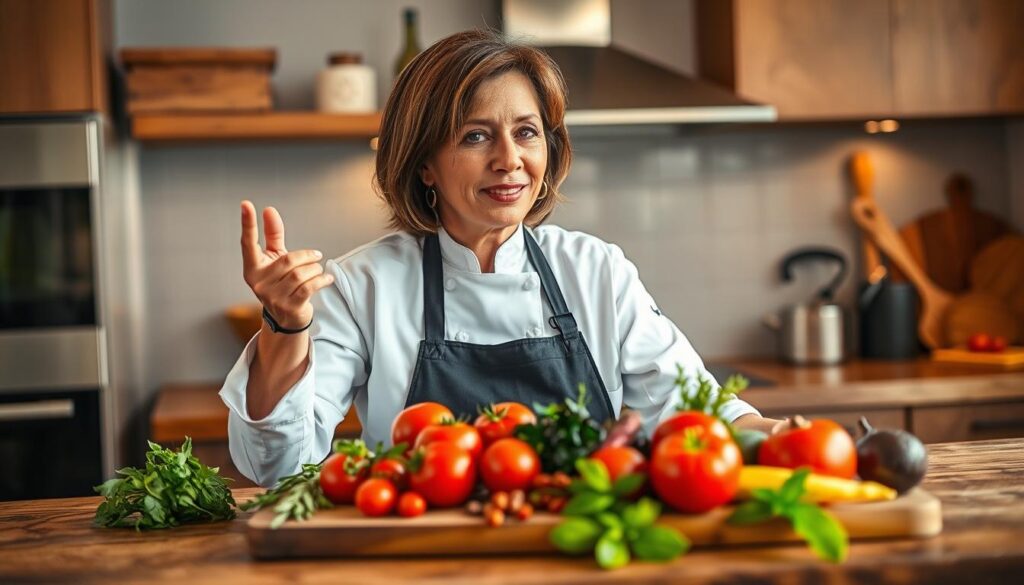
Answering these questions makes you relatable, human, and unforgettable. These anecdotes are the umami of your professional identity. They create a lingering aftertaste that makes people want another bite.
This isn’t just autobiography. It’s strategic personal branding. Your story is the hook that catches media interest, investor curiosity, and customer loyalty. It’s the reason someone reads past the first line.
Think of it as the foundational chapter for crafting a brand story. The principles are the same. A compelling narrative can elevate your ‘chef about me’ from a CV into a legacy. It transforms a service into an experience.
Your story is your signature. Make sure it’s worth reading.
Tips for Tone & Style
Your chef bio’s tone is like the last seasoning on a dish. Too much, and it overpowers; too little, and it’s lost. Aim for a smart casual balance. Arrogance is like too much truffle oil, and generic talk is like unseasoned potatoes. Neither is good.
Consider a masterclass in tone: “except the cat…she’s completely worthless.” This line is witty, humble, and makes you feel connected. Phrases like “some that absolutely bankrupted me!” or a sign-off like “Sláinte,” show confidence without being too bold. They’re like sharing a joke or a toast, not just reading a CV.
Your style should set the stage for your culinary brand. Are you a refined fine-dining expert? Use sophisticated, precise language, like a reduced sauce. Or, if you’re a street food innovator, go for short, punchy sentences with attitude.
| Culinary Persona | Recommended Tone & Style |
|---|---|
| The Fine-Dining Sage | Elegant, descriptive language. Focus on technique, provenance, and philosophy. Sentences can be longer, more contemplative. |
| The Rebel Innovator | Direct, energetic, and bold. Use active verbs and cultural shorthand. A rhetorical question can be a powerful hook. |
| The Heritage Storyteller | Warm, narrative-driven, and evocative. Weave in personal memories and sensory details (“the smell of my grandmother’s kitchen”). |
Adding personal touches makes your bio stand out. Share a favorite food memory, a quirky kitchen philosophy, or a past failure. These details add texture and make your bio compelling.
Does your bio sound like you, or like a generic press release? Your voice should be as unique as your plating style. Writing your bio should feel like preparing for a special guest, not just filling out a form.
Your chef bio should reflect your culinary style. It’s not just about what you’ve done, but how you talk about it. Let your unique voice, whether witty, wise, or bold, guide your bio. Authenticity is the key to a great chef bio.
Integrating Keywords for SEO
SEO turns your cooking story into a signpost on the internet. A great chef introduction bio that doesn’t use search engines is like talking to no one. You want to be seen, not just read.
It’s not about forcing “best chef in Chicago” into every sentence. That’s like using too much truffle oil—it’s obvious. Strategic keyword use is an art. Think about what your ideal client searches for online.
Make these search terms part of your story. For instance:
- “Private chef for Mediterranean cuisine” in your philosophy section.
- “Sous chef Tampa” in your career story.
- “Hot sauce maker” when talking about your products.

The technical side is important too. Use header tags right. Your name or title as the H1, and section headings as H2s. Search engines like structure. A well-organized bio looks credible.
Your bio is key content. Use it everywhere: your website, LinkedIn, Instagram, and Google Business Profile. A consistent, optimized bio boosts your online presence. Every platform is a chance to be found.
A well-crafted chef introduction is your digital greeting to the world. It says, “I’m here, I’m important, and I speak your language.” Get this right, and you’ll go from being a secret to a popular spot.
Where to Publish Your Bio
Publishing your bio is like plating a dish. You arrange the same ingredients differently for each setting. Your chef about me story is a versatile tool, not a one-time thing.
Your website is where you share your full story. But for social media, you need something quick and catchy.
- The Home Base (Your Website): This is your digital flagship. It’s where you share your full biography.
- The Social Soundbite (Instagram, LinkedIn, Facebook): Here, you need to be brief. Use a catchy tagline and a clear call to action.
- The Client-Focused Abstract (Booking Platforms): Highlight your specialty and past successes. It’s a business pitch with a personal touch.
- The Physical World (Offline & IRL): Don’t forget about the real world. Use a bold version for signs and press kits.
Each platform has its own audience and time frame. You must adapt your story to fit each one. Your LinkedIn network might not care about your weekend cooking, but they’ll be interested in your sustainable sourcing talks.
Your goal is to be recognized consistently. Whether someone finds you online or in person, they should see the same brilliant you. Just presented in the right way for the setting.
Regular Updates
A static chef bio is like a restaurant with a never-changing menu. Even loyal customers will stop coming. It becomes a museum piece, out of touch with your kitchen’s current scene. Your portfolio should be a living document, not a static record.
Think of a chef who wrote their story in 2019. Their tale misses out on the pandemic’s impact, new cooking techniques, and successful pop-ups. Your career has grown. Your chef bio must show these changes.
What’s worth updating? Almost anything that shows growth. Did you win a cooking contest? Cater a big wedding? Create a new dish? These are the exciting moments in your culinary journey. Share them.
Your bio is like a digital menu. It should highlight what’s new and exciting. Review it every quarter. This keeps your bio fresh and professional.
An updated chef bio sends important messages:
- Dynamism: You’re always creating, not just resting on past achievements.
- Relevance: Your skills and interests keep up with food trends and your curiosity.
- Professional Rigor: You pay attention to your brand’s details, just like your cooking.
Ignoring updates tells a different story. It might seem like you’re not as active or passionate as before. In a field that loves the new, an old bio is a big mistake.
Updating is easy. You don’t need to rewrite everything. Just add new achievements, change photos, or update your philosophy. It’s about keeping your story current, not constantly changing it.
Your story is always unfolding. Make sure your chef bio reflects the latest chapter.
Conclusion
A chef introduction bio is like the first bite of your professional identity. It’s meant to grab your attention and make you curious. We’ve broken down the key ingredients: a compelling story, the right tone, and a format that search engines can understand.
Your bio is more than just a list of facts. It’s a dynamic tool that tells your story. It’s like the philosophy of Dominique Crenn or the humor of David Chang. It’s your unique tale, told with purpose.
A great chef introduction isn’t just for your website. It should shine on Instagram, LinkedIn, and your restaurant’s menu. It needs to be updated regularly, like a new menu season.
So, grab your pen. Your first draft might need some work. Revise it until your true voice comes through. That authentic introduction is your unique dish in a world of imitations. Now, start writing.